
2023 Recap: Most popular posts and lessons learned
It’s New Year’s Eve where I live, and I’m just wrapping up an extended winter holiday at my in-laws’. I feel refreshed and very grateful for the year that’s wrapping up tonight! Before the year is up, however, I wanted to take a moment to recap what 2023 has looked like and meant to me, by outlining my most popular content and sharing a bit about the lessons I learned this year. Let’s get into it!

“I Want to Hold Your Hand” rhythm pattern
Today I’d like to share some sheet music I made to help you learn to play “I Want to Hold Your Hand” by the Beatles using my favourite rhythm pattern for beginners.
If you’re new here, my rhythm pattern is an easy way for people to start playing piano by ear, rather than needing to learn how to read sheet music right away.

Common variations to chords in the major key signature
Recently we’ve been talking about the chords within any major key signature and how you can use them to create chord progressions that express different feelings. Today I’d like to expand on this to talk about some of the variations to the standard chords that musicians often use to express even more emotions in their music.
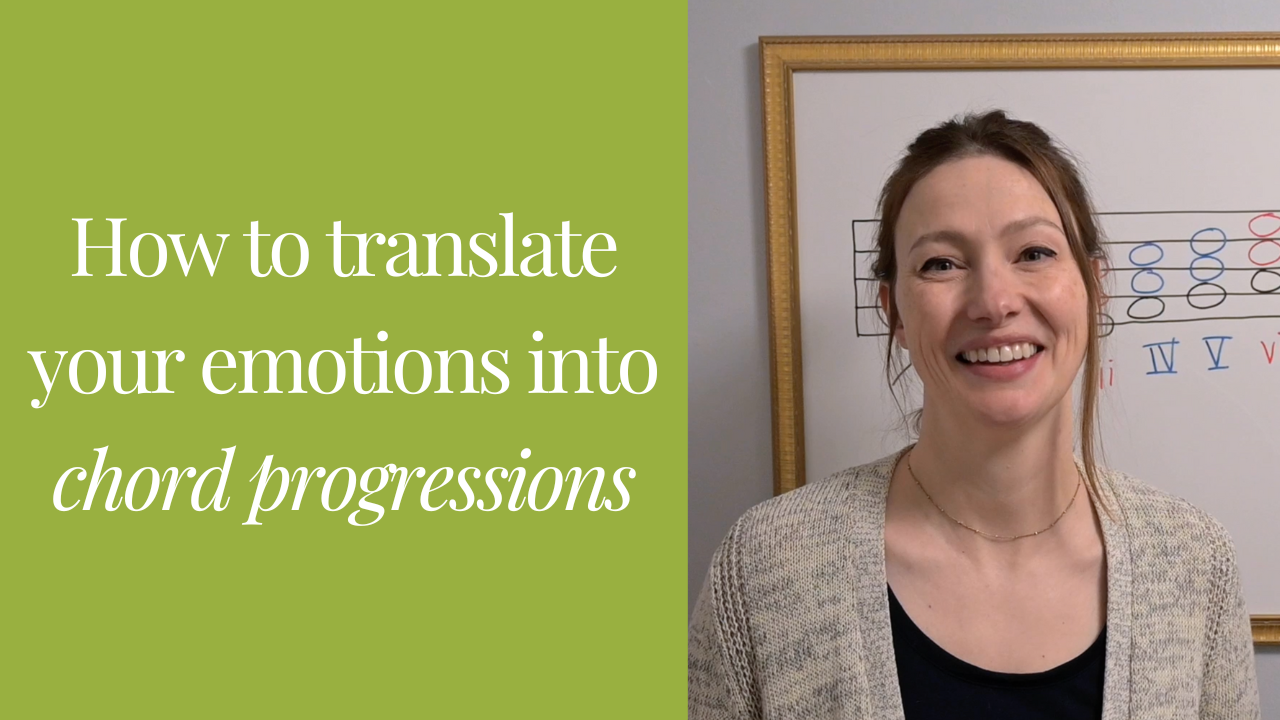
How to translate your emotions into chord progressions
Once you know the basics of where the major and minor chords are in a key signature, you’re ready to start experimenting at your piano and finding sequences or chord progressions that you like. But it can be difficult to get started at first because the possibilities for your music seem so endless. How do you know which chords to use and which ones will work best for your song?

Introducing the chords in a major key signature
If you want to start writing music, one of the first decisions you’ll need to make is which chord progressions you want to have as the foundation of your song. There are a couple of ways you can get started in this.

Introducing music theory for songwriting
Today I’d like to start a series of videos teaching music theory specifically for people who are interested in writing their own music. Because music theory can be intimidating for people, it seems like a good place to start would be to just talk about what music theory is and why it’s important to learn about.

Building your piano practice mindset
I think most of us have felt the pressure to be a good student and practice every day. Some people find the routine of daily practice to be really motivating. But I was never one of those people. I had to find my own ways to get motivated to practice, and today I’d like to share what I’ve learned in case it helps you!

Adding pedal to our beginner rhythm pattern
A viewer of my previous video “My favourite rhythm pattern for beginner piano players” requested a video demonstrating how to add the sustain pedal to this rhythm pattern. I’m thrilled that my viewers want to take on extra challenges, so here it is!

The key to building confidence in reading piano music
If you're interested in gaining more independence in reading piano music, there is one skill I recommend you focus on that will catapult you to the next level -- and that is learning how to read rhythm. Learning how to identify the rhythm of the notes you’re supposed to play is going to unlock your confidence in a way that you can’t imagine! Today, I’d like to explain why this skill is so important, why hard for beginners to approach, and what you can do to gain your first steps in rhythmic independence :)