Gentle ways to learn your Note Neighbours
Lately we've been exploring how learning piano gets easier when you see groups of notes as little neighbourhoods around your piano. Today, let's talk about ways you can learn your Note Neighbourhoods gently, in a way that honours your natural energy, attention, and emotions, so that every part of you feels welcome in the learning process.
In this final video in my Note Neighbours series, I'll share some of the tools and strategies I use with my own beginner students to help note reading feel less overwhelming.
Try it for yourself!
I’ve created a free Note Neighbours practice book to help you apply what we explored in the video! It includes eight short melodies — four in the treble clef, four in the bass clef — designed to support your growing fluency with treble G, middle C, and bass F.
Download the Note Neighbours Practice Sheets for free by clicking the Download button. No sign-ups or email list required! :)

Want to go deeper?
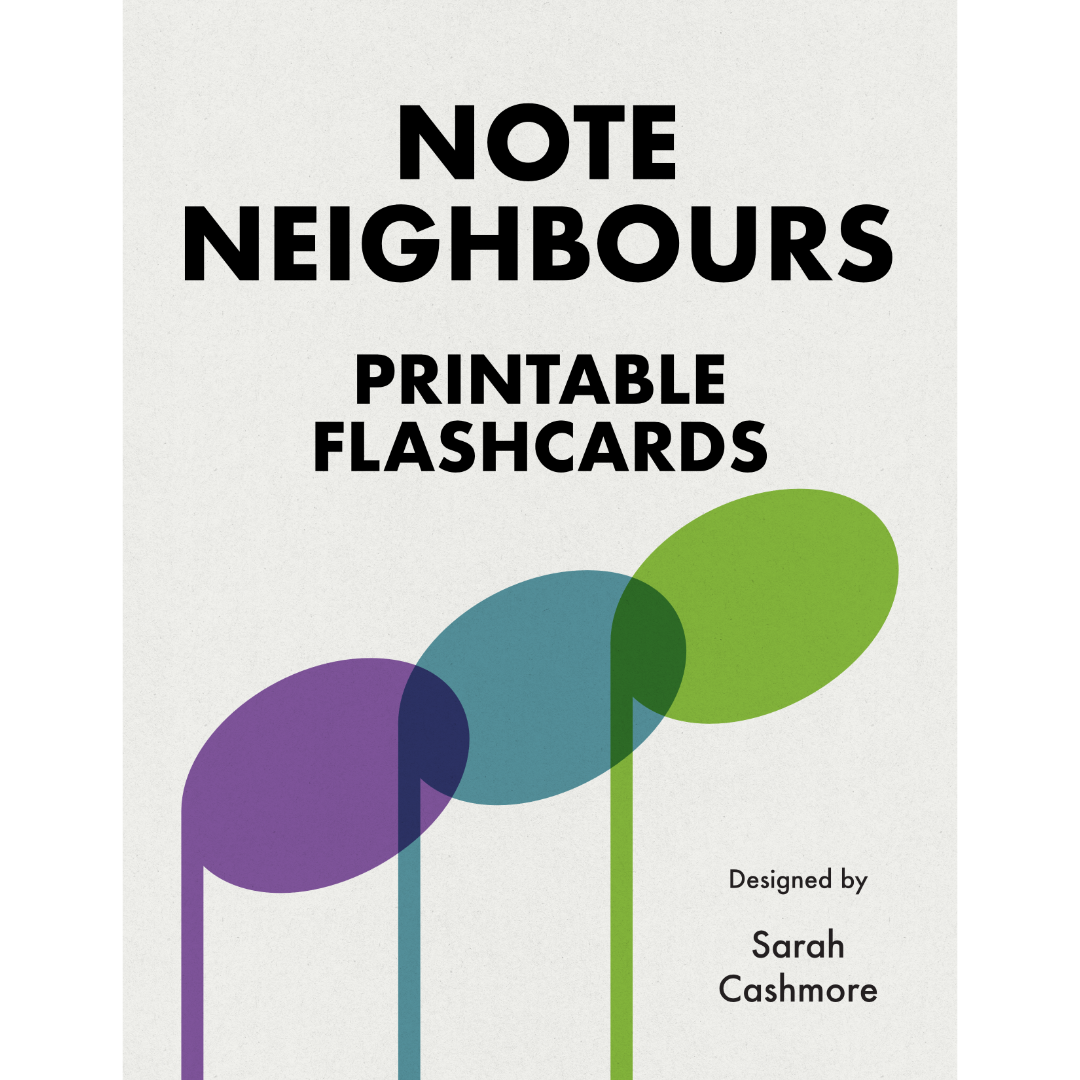
If you enjoyed this approach, you might also like my Note Neighbours Flashcards, a printable set that walks you through all the note neighbourhoods! They’re great for visual learners and anyone looking to build note-reading fluency from the ground up.

Most of us learned the alphabet through reading and spelling. We were trained to think in words — to associate A with apple or E with elephant.
But as musicians, we follow musical patterns that ask us to use familiar letters in new ways. This printable flashcard set gently re-patterns how you see musical notes: in their relationship as neighbours!